
CE Certification for French Fries Production Lines: Complete Technical Compliance Guide for EU Market Access
CE certification for french fries production lines requires compliance with 4 mandatory EU directives and typically costs €18,000 to €42,000 for a complete 1-3 ton per hour system. This technical compliance process validates electrical safety, electromagnetic compatibility, and machinery hazard controls according to EN 1672-2 and EN 60204-1 standards. Industrial buyers must understand that CE marking is not optional but a legal requirement for operating within European Economic Area markets.
- Applicable EU Directives: 4 mandatory directives
- Certification Scope Coverage: entire processing line
- Technical Documentation Package: 200-350 pages
- Compliance Testing Protocol: 10-14 weeks
- Market Access Impact: 30+ countries
Manufacturers exporting to Germany face strict enforcement where customs authorities routinely inspect equipment documentation at ports of entry. Non-compliant french fries production lines receive immediate detention until proper CE documentation is presented, causing average project delays of 22 days and additional storage costs exceeding €8,000 per incident, with potential contract cancellation risks.
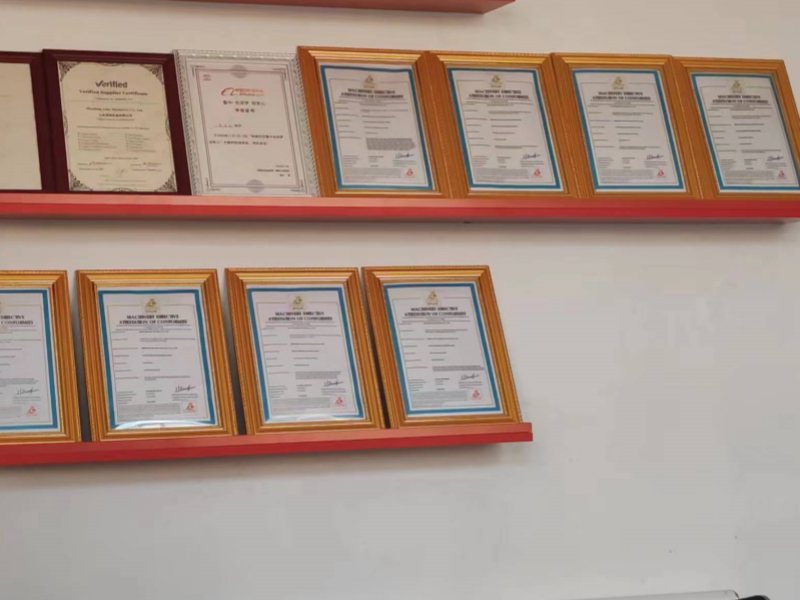
Understanding CE Marking for Industrial Food Processing Equipment
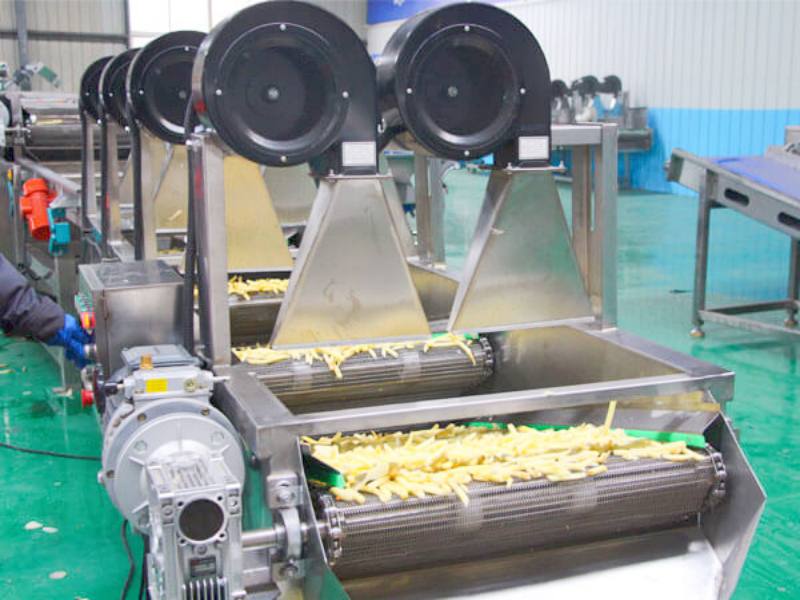
CE marking represents the manufacturers declaration that french fries production equipment meets all applicable EU directives. For industrial processing lines, this involves comprehensive assessment of mechanical hazards, electrical systems, and material safety. The process begins with identifying which directives apply based on equipment voltage, control systems, and contact surfaces. Unlike simple machinery, production lines require integrated system certification covering washing, cutting, blanching, drying, frying, and freezing modules as a single functional unit.
Industrial buyers should recognize that CE certification is self-declaratory but requires third-party testing for critical components. The notified body involvement becomes mandatory when equipment operates above standard risk parameters or incorporates novel technologies. Most french fries lines fall under Annex IV of Machinery Directive requiring notified body examination for frying and high-temperature zones.
Mandatory EU Directives for French Fries Production Lines
Four primary directives govern CE certification for french fries equipment. Machinery Directive 2006/42/EC covers mechanical and pneumatic hazards, requiring emergency stops, guarding, and risk assessments. Low Voltage Directive 2014/35/EU applies to electrical equipment between 50-1000V AC, mandating protection against electric shock and thermal risks. EMC Directive 2014/30/EU ensures electromagnetic emissions do not interfere with other equipment. Finally, Regulation EC 1935/2004 governs all food contact materials, requiring migration testing for plastic components and conveyor belts.
Each directive demands specific technical evidence. Machinery Directive requires EN ISO 12100 risk assessment and EN 60204-1 electrical standard compliance. EMC Directive needs testing per EN 61000 series. Food contact materials must meet EN 1186 migration limits. Failure to address any single directive invalidates the entire CE marking, blocking market entry.
Technical Documentation Package Requirements
The technical documentation package forms the cornerstone of CE certification, typically comprising 200-350 pages of detailed evidence. This includes electrical schematics, pneumatic diagrams, mechanical drawings, material certificates, and risk assessment matrices. For a standard 2 ton per hour french fries line, documentation must cover 15-20 individual machines integrated through common control systems.
Critical components include the machinery risk assessment file identifying all potential hazards from infeed to packaging. The electrical safety file demonstrates compliance with IP ratings, earth bonding, and circuit protection. The EMC technical construction file shows mitigation measures for harmonics and radiated emissions. Material compliance files provide declarations of conformity for every polymer, lubricant, and coating contacting potato products above 40 degrees Celsius.
Compliance Testing Protocol and Verification
The testing phase spans 10-14 weeks and involves multiple verification stages. Initial design review examines drawings and calculations before manufacturing begins. Factory acceptance testing includes earth continuity tests, insulation resistance measurements, and emergency stop response verification. EMC testing measures conducted emissions at frying equipment inverters and control panel radiated emissions.
Performance testing validates temperature control accuracy within ±2 degrees Celsius for blanchers and fryers. Safety testing confirms light curtain response times under 15 milliseconds and pressure relief valve activation at 1.1 times maximum working pressure. All tests require witnessed inspection by qualified personnel with calibrated instruments traceable to national standards.

Common Non-Conformance Risks and Preventive Measures
Electrical panel design represents the highest non-conformance risk, with 35 percent of french fries lines failing initial EMC testing due to inadequate filtering on variable frequency drives. Prevention requires installing line reactors and shielded cables from project inception, adding approximately €3,200 to base equipment cost but eliminating €8,000-12,000 in redesign and retesting expenses.
Mechanical guarding issues affect 28 percent of lines, typically involving insufficient mesh size on fryer exhaust systems or missing interlocks on inspection hatches. Food contact material non-conformances arise in 22 percent of cases, usually from undocumented conveyor belt polymers or lubricants above permitted migration limits. Comprehensive supplier qualification programs and early material declarations prevent these costly delays.
Case Study: 3 Ton Per Hour Frozen Fries Line Certification
A Middle Eastern processor commissioning a 3 ton per hour line for export to Italy faced certification challenges during final inspection. The project involved 18 integrated machines with total connected load of 485 kW. Initial documentation review identified gaps in risk assessment for high-speed centrifugal dewatering and inadequate EMC mitigation for 12 inverter drives.
Our engineering team implemented corrective actions including redesign of control panel layout, addition of 3-phase line reactors, and comprehensive material migration testing for all polymer components. The certification process required 12 weeks including notified body review by TÜV Rheinland. Final CE marking was issued with complete technical file transfer, enabling smooth customs clearance at Rotterdam port and installation startup within planned timeline.
Frequently Asked Questions on CE Certification
Does CE certification expire after initial marking?
CE marking remains valid indefinitely provided no substantial design modifications occur. However, directives periodically update with new requirements. Machinery Directive amendment in 2023 introduced stricter cybersecurity requirements for networked equipment. Manufacturers must issue supplementary declarations covering new requirements and update technical files accordingly. Annual surveillance audits become necessary if notified body involvement was required during initial certification.
Can existing non-CE lines be retrofitted for compliance?
Retrofitting is technically feasible but economically challenging. Assessment of a 5-year-old 2 ton per hour line typically reveals 12-15 non-conformances requiring €25,000-40,000 in modifications. Critical issues include obsolete control systems lacking safety PLCs, unguarded drives, and non-compliant contact materials. In most cases, partial equipment replacement proves more cost-effective than comprehensive retrofitting.
What happens if customs discovers non-compliant equipment?
Customs authorities in EU member states have authority to detain shipments lacking proper CE documentation. The equipment remains in bonded storage at importer expense, typically €150-300 daily. Importers must either return shipment to origin or obtain emergency compliance documentation within 30 days. Emergency certification costs 40-60 percent more than planned certification and requires equipment access for testing, creating logistical complications.