
frozen french fries production line epc for algeria import substitution strategy
algeria imports over 85 percent of its frozen french fries consumption annually, representing a market opportunity exceeding 50,000 tons per year. establishing local production capacity through turnkey epc delivery reduces import dependency while capturing value chain margins. this analysis outlines factory planning parameters for 1-3 ton per hour production lines optimized for algerian operating conditions and raw material profiles.
- key signal 1: 1-3 tph capacity range matches 70 percent of north african import substitution projects
- key signal 2: $1.5m-$4.5m capex delivers full automation with 3-year payback threshold
- key signal 3: 85-92 percent yield efficiency from raw potato to finished frozen product
- key signal 4: algerian market demand growing at 12 percent annually with 95 percent urban consumption
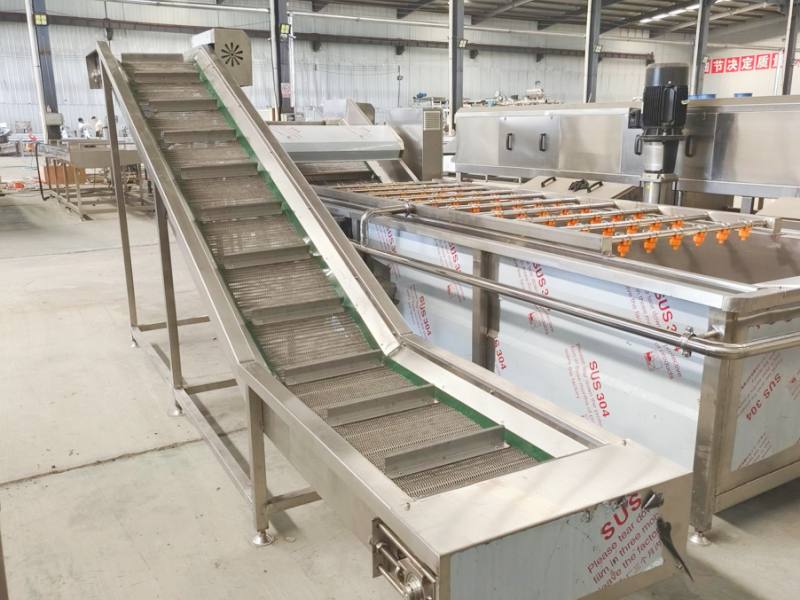
- key signal 5: complete line integration includes washing, peeling, cutting, blanching, drying, frying, freezing, and packaging modules
global frozen potato processing equipment manufacturers have standardized modular designs that accelerate deployment in emerging markets. algeria’s strategic location enables export potential to neighboring maghreb and sahel regions, making capacity planning critical for regional market capture.

capacity planning fundamentals for algerian market requirements
proper capacity sizing determines long term viability of import substitution projects. algerian consumption patterns show peak demand during ramadan and summer tourism seasons, requiring production flexibility. a 1 ton per hour line operating 16 hours daily produces 4,800 tons annually, sufficient to capture 10 percent market share. scaling to 2 tph doubles market capture while reducing per-unit production costs by 18 percent due to optimized labor and utility distribution.
shift modeling must account for local labor regulations limiting continuous operations to two shifts without premium overtime. three shift operations require automated material handling and storage systems to maintain production during shift changes. seasonal potato availability in algeria runs from june through october, necessitating 3,000-5,000 ton raw potato storage capacity for year round operations. this storage requirement directly impacts site layout and cold chain infrastructure planning.
raw material specification and preprocessing design
algerian potato varieties require specific equipment adaptations. local tubers average 18-22 percent dry matter content compared to 22-24 percent in european processing varieties. this difference mandates extended blanching times and modified cutting blade geometries to achieve target texture profiles. preprocessing lines must handle 50-80mm diameter potatoes with integrated stone and debris removal systems critical for protecting cutting heads.
water consumption rates average 8-12 cubic meters per ton of finished product in algerian facilities due to higher soil adhesion on locally sourced potatoes. water recycling systems reduce fresh water demand by 60 percent but require additional filtration and sedimentation tanks. these systems add 15 percent to initial equipment cost while delivering operational savings within 24 months.
technology selection criteria for desert climate operations
algerian facilities face ambient temperatures exceeding 45 degrees celsius during summer months, impacting refrigeration system efficiency. ammonia based freezing systems maintain coefficient of performance above 3.5 even at extreme ambient conditions, compared to 2.8 for freon systems. this 25 percent efficiency advantage justifies higher capital cost in desert environments. evaporative condensers with automatic cleaning cycles prevent scale buildup from hard water conditions common in algerian industrial zones.
frying oil management systems must accommodate high ambient temperatures that accelerate oxidation. continuous filtration systems with 50 micron capability and daily fresh oil top-up rates of 8-10 percent maintain quality standards. oil storage tanks require nitrogen blanketing to prevent degradation during storage at elevated temperatures. these specifications add $180,000-$250,000 to equipment cost but extend oil life by 40 percent.
automation level and workforce planning
semi automated lines require 45-55 operators per shift for 2 tph capacity, while fully automated systems reduce this to 18-22 operators. labor cost analysis shows break-even point for automation premium occurs at 18 months in algerian market conditions. automated defect sorting using vision systems achieves 98 percent accuracy compared to 85 percent for manual inspection, directly impacting yield and brand reputation in import substitution scenarios.
site infrastructure and utility requirements
typical 2 tph frozen french fries facility requires 8,000-10,000 square meters of covered production area plus 15,000-20,000 square meters for raw material storage and wastewater treatment. ceiling heights must exceed 8 meters in processing areas to accommodate overhead conveyance and maintenance access. floor loading capacity of 1,500 kg per square meter supports equipment weight and potato storage bunkers.
power demand reaches 1,200-1,500 kva for 2 tph lines with simultaneous freezing and refrigeration loads. algerian industrial zones provide 400v three phase supply but require on site transformers and backup generators for 30 percent capacity coverage. generator fuel storage must meet 72 hour autonomy due to regional supply disruptions during peak summer demand. water supply needs 25 cubic meters per hour at 3 bar minimum pressure, often requiring booster pumps and ground water wells.
wastewater treatment and environmental compliance
effluent contains high starch loads requiring dissolved air flotation systems before municipal discharge. biological oxygen demand typically exceeds 3,000 mg per liter, necessitating multi stage treatment. algerian environmental regulations mandate 150 mg per liter bod levels for industrial discharge into municipal systems. compact treatment plants occupying 500 square meters handle 2 tph line output at capital cost of $280,000-$350,000.
epc delivery model and project timeline
turnkey epc delivery compresses project timeline from 24-30 months to 18-22 months through integrated design and procurement. phase one involves four weeks of site assessment and raw material testing to validate equipment specifications. phase two delivers detailed engineering and long lead item procurement during weeks 5-16. phase three covers construction and installation during weeks 17-52. phase four includes commissioning and operator training during weeks 53-60.
modular equipment design enables 70 percent factory acceptance testing before shipment, reducing site installation risk. containerized shipping to algerian ports requires equipment separation into 15-20 modules for 2 tph lines. customs clearance typically requires 3-4 weeks for complete industrial processing lines. local erection crews supervised by chinese engineers complete mechanical installation in 8-10 weeks.
case study: 2 tph line deployment in north africa
a 2023 deployment in neighboring morocco demonstrates algerian market parameters. the project achieved first production 19 months after contract signing, processing 2,200 tons of raw potatoes in first full year. yield reached 88.5 percent, slightly below target due to local variety adaptation during initial six months. energy consumption averaged 380 kwh per ton, 12 percent higher than design due to summer ambient conditions but within acceptable range.
workforce training required 12 weeks for operators and 6 weeks for maintenance technicians. chinese engineers provided on site supervision during first three months of production, achieving 92 percent uptime by month four. the facility captured 15 percent of local market within 18 months, validating import substitution business model. total project investment of $3.8 million delivered positive cash flow in month 22.
lessons learned for algerian implementation
potato supply chain development requires 6-12 month lead time before production startup. contract farming agreements with 30-50 growers within 150 kilometer radius ensure consistent quality and supply. payment terms must accommodate local agricultural cycles, with 30 percent advance payment to farmers for seed and fertilizer. these arrangements add $150,000-$200,000 to working capital requirements but secure raw material supply.
spare parts inventory for critical wear components must be maintained on site due to 8-12 week delivery times from asia. recommended inventory value equals 3 percent of equipment cost, or $120,000 for typical 2 tph line. this includes cutting blades, filter elements, and electronic sensors. establishing local service partnerships for refrigeration and electrical systems reduces response time from 48 hours to 12 hours for non specialized repairs.

implementation considerations for algerian investors
joint venture structures with local partners accelerate licensing and market access. algerian regulations require 51 percent local ownership for manufacturing facilities receiving state incentives. technology transfer agreements must specify equipment supply, training protocols, and ongoing technical support. typical joint venture arrangements involve 60 percent equity from local partner and 40 percent from equipment supplier or international investor.
financing structures combine 30 percent equity with 70 percent debt from algerian development banks. equipment financing through chinese export credit agencies covers 85 percent of machinery value at 3.5 percent interest over 7 years. this structure reduces initial capital requirement to $600,000-$1.2 million for 2 tph facility while maintaining majority local ownership. loan covenants typically require completion guarantee from epc contractor.
regulatory approval pathway
industrial investment approval from andi requires 45-60 days with complete documentation. environmental impact assessment adds 30-45 days for review by ministry of environment. construction permits from local wilaya authorities require 20-30 days following andi approval. total approval timeline reaches 95-135 days assuming no documentation errors. epc contractors with local representation accelerate this process through established relationships with approval authorities.
frequently asked questions on algerian projects
what is the minimum viable capacity for algerian market entry? 1 tph capacity producing 2,400 tons annually captures sufficient market share to achieve economies of scale while limiting initial investment risk. this scale requires $1.5m-$2.2m investment and reaches break-even at 65 percent capacity utilization.
how does local potato quality impact equipment selection? lower dry matter content requires extended blanching and modified cutting geometry. equipment warranties must specify performance guarantees based on local raw material testing during design phase. this testing occurs during initial site assessment at no additional cost.
what is typical payback period in algerian market conditions? import substitution projects achieve 24-36 month payback based on 25-30 percent import price premium and local production cost advantages. energy costs represent 18-22 percent of production cost, making efficiency critical to financial performance.