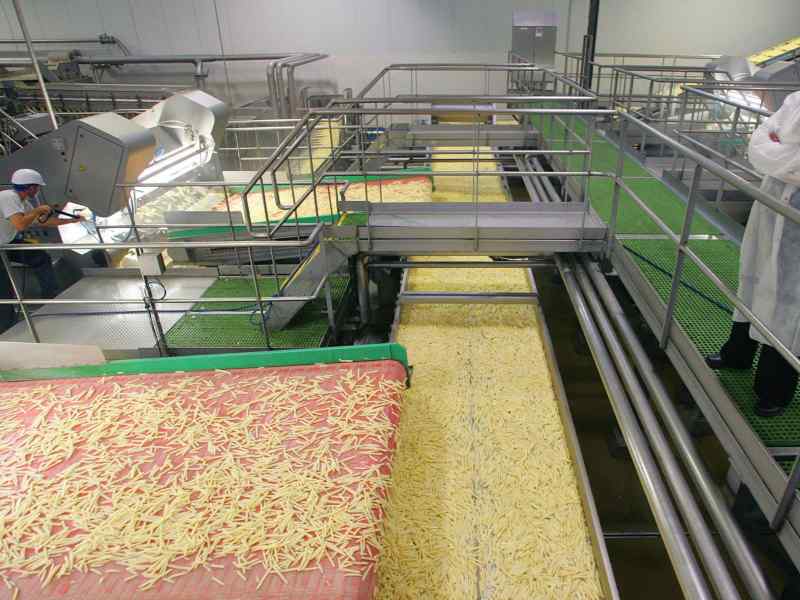
Optimizing Oil Uptake Control in Industrial French Fry Manufacturing
Reducing oil absorption by 15-30% in frozen french fry production requires precise control over moisture content and frying parameters. Industrial processors face significant quality degradation when oil penetration exceeds 8-12% of total product weight, directly impacting shelf stability and nutritional value while increasing production costs.
- Root Cause: Excessive surface moisture retention
- Corrective Action: Optimized drying protocols
- Preventive Measure: Pre-frying moisture control
- Impact Range: 8-15% oil reduction potential
- Detection Method: Real-time moisture monitoring
Leading European manufacturers in Belgium and the Netherlands have established benchmark standards for oil content below 5% in finished frozen products through advanced processing controls. These facilities demonstrate how systematic troubleshooting of frying variables delivers consistent product quality while minimizing oil consumption per metric ton of finished goods.

Process Engineering Solutions for Oil Absorption Reduction
Pre-Frying Moisture Management
Surface moisture represents the primary driver of oil uptake during frying operations. Industrial lines must achieve moisture levels below 60% entering the fryer to prevent excessive oil penetration. Advanced blanching systems operating at 85-95 degrees Celsius for 3-5 minutes modify starch granule structure while gelatinizing surface starches to create a barrier against oil infiltration.
Drying Technology Optimization
Post-blanching drying removes surface water that would otherwise convert to steam and create negative pressure zones drawing oil into the product matrix. High-velocity air knife systems or centrifugal dryers reduce surface moisture by 40-60% before frying. This mechanical dewatering proves more effective than extended ambient draining, reducing oil uptake by 2-4 percentage points in finished products.
Frying Parameter Control
Oil temperature management between 165-175 degrees Celsius optimizes moisture evaporation while minimizing oil absorption. Lower temperatures increase residence time, allowing oil penetration, while excessive heat causes rapid crust formation trapping interior moisture. Precise belt speed control ensures uniform residence time distribution, preventing overcooked sections with high oil content.
Vacuum frying technology operating at 100-120 degrees Celsius under reduced atmospheric pressure significantly reduces oil uptake while preserving color and texture. This method limits the oxidation rate and reduces acrylamide formation, though requiring higher capital investment than atmospheric systems.

Operational Implementation: Egypt Processing Facility
A major processing facility in Alexandria implemented comprehensive oil reduction protocols across their 5-ton-per-hour line. By upgrading from ambient draining to forced-air drying tunnels and optimizing blanching pH levels to 5.8-6.2, the operation reduced oil content from 8.5% to 5.2% in frozen par-fried products.
The modification included installing continuous oil filtration with turnover rates of 8-10 times per hour, maintaining oil quality indices below 25% total polar compounds. This systematic approach eliminated flavor defects while reducing oil make-up costs by $45,000 annually.
Diagnostic Protocols for Oil Control
How does potato variety affect oil absorption rates?
High-solid varieties such as Russet Burbank or Agria demonstrate 20-30% lower oil uptake compared to waxy varieties due to reduced surface moisture retention and tighter cellular structure. Specific gravity measurements above 1.085 indicate optimal dry matter content for low-oil processing.
What role does oil quality play in absorption levels?
Degraded oil with elevated free fatty acid content above 1.5% creates surface tension imbalances that increase product wetting and penetration rates. Continuous filtration and active cooling of oil storage tanks maintain viscosity stability, reducing absorption by maintaining consistent heat transfer coefficients.
Can coating applications reduce frying oil uptake?
Cellulose-based coatings and modified starches applied prior to frying create hydrocolloid barriers that reduce oil penetration by 15-25%. These solutions require precise application rates of 0.5-1.5% by weight to avoid texture alterations while maintaining the desired crispy mouthfeel.